Frank is the third actor of his name to achieve prominence. Frank Mayo I was famed years ago for his characterizations of ‘Davy Crockett” and “Puddin’ Head Wilson.” Frank III went on the stage in England, but came over to join Selig.
This is the history of Frank Mayo, who has lately been doing such fine work with Kitty Gordon and Louise Huff. Frank’s father and grandfather were both actors of note, and the name of Frank Mayo is being passed down the annals of theatrical history with an A-1 mark beside it. While Frank is fond of the movies, his dream is to revive the one big play with which his name is connected. To tell now would be to spoil the story for you. Read it in the January Magazine.
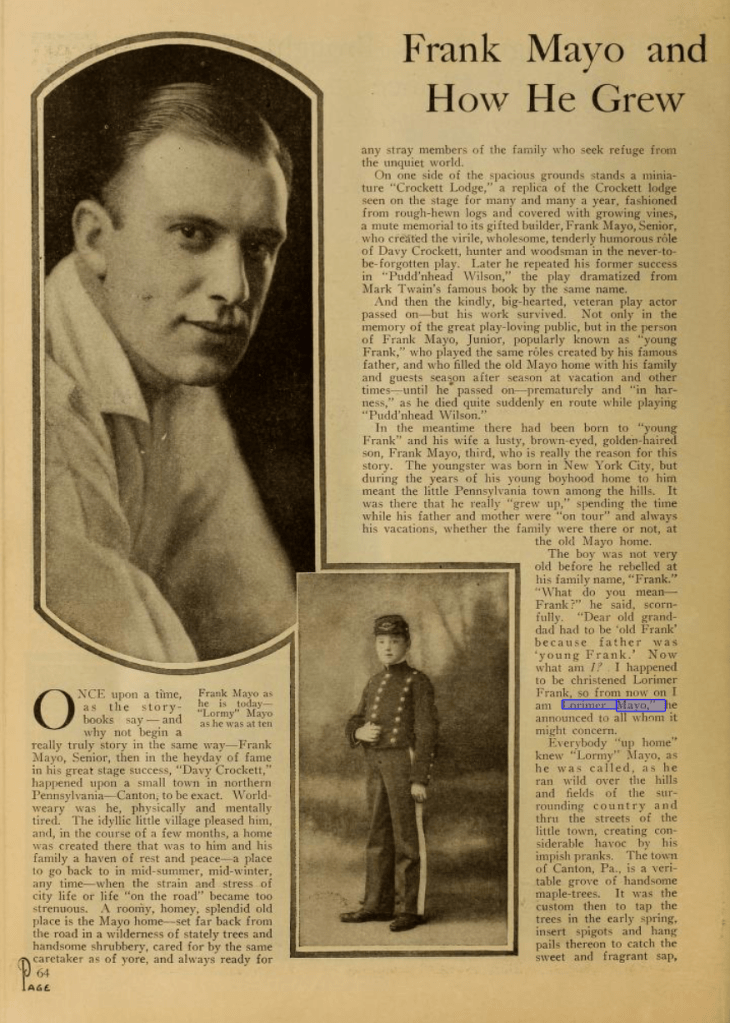
FRANK MAYO AND HOW HE GREW
by Lillian Montayne
Motion Picture Magazine, Vol. XVI No 12, January, 1919
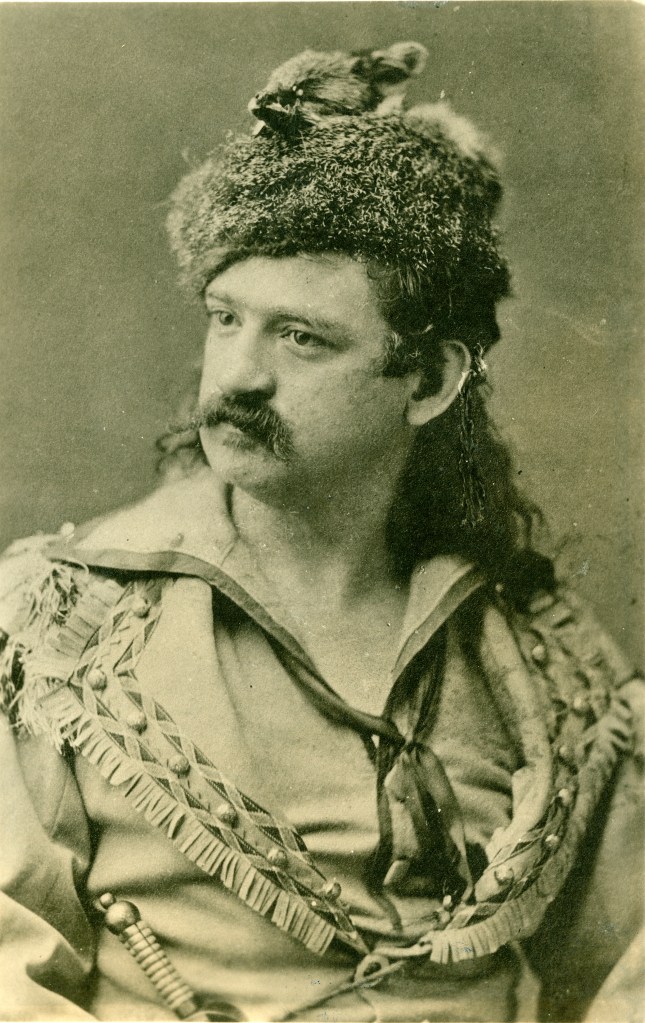
ONCE upon a time, as the storybooks say — and why not begin a really true story in the same way — Frank Mayo, Senior, then in the heyday of fame in his great stage success, “Davy Crockett,” happened upon a small town in northern Pennsylvania — Canton, to be exact. World-weary was he, physically and mentally tired. The idyllic little village pleased him, and, in the course of a few months, a home was created there that was to him and his family a haven of rest and peace — a place to go back to in mid-summer, mid-winter, any time — when the strain and stress of city life or life “on the road” became too strenuous.
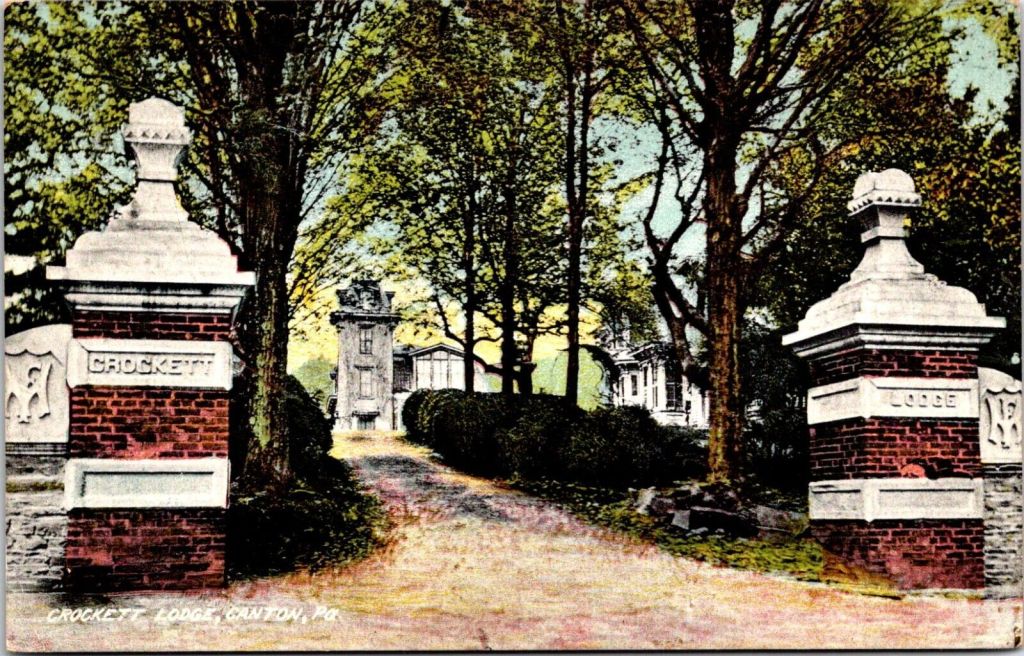
A roomy, homey, splendid old place is the Mayo home — set far back from the road in a wilderness of stately trees and handsome shrubbery, cared for by the same caretaker as of yore, and always ready for any stray members of the family who seek refuge from the unquiet world.

On one side of the spacious grounds stands a miniature “Crockett Lodge,” a replica of the Crockett lodge seen on the stage for many and many a year, fashioned from rough-hewn logs and covered with growing vines, a mute memorial to its gifted builder, Frank Mayo, Senior, who created the virile, wholesome, tenderly humorous role of Davy Crockett, hunter and woodsman in the never-to-be-forgotten play.
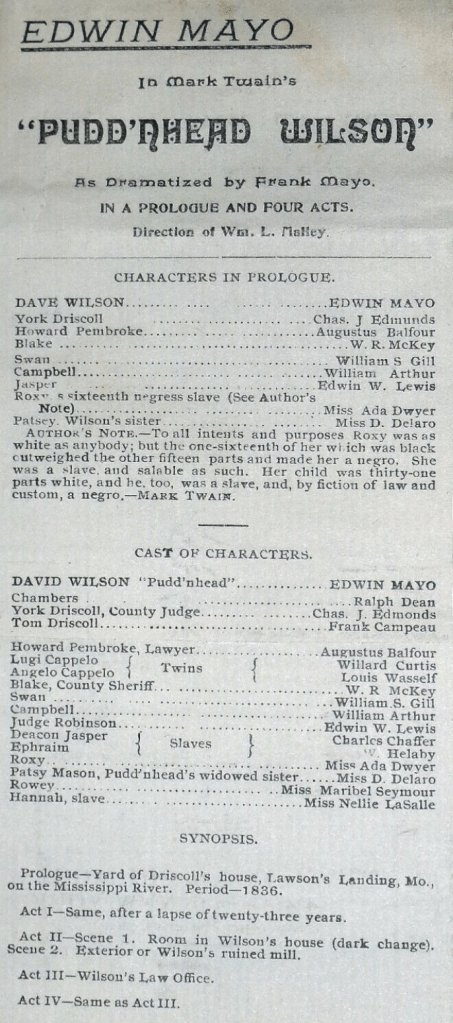
Later he repeated his former success in “Pudd’nhead Wilson,” the play dramatized from Mark Twain’s famous book by the same name.
And then the kindly, big-hearted, veteran play actor passed on — but his work survived. Not only in the memory of the great play-loving public, but in the person of Frank Mayo, Junior [Edwin Forrest Mayo],
popularly known as “Young Frank,” who played the same roles created by his famous father,
and who filled the old Mayo home with his family and guests season after season at vacation and other times — until he passed on — prematurely and “in harness,” as he died quite suddenly [in 1900] en route while playing “Pudd’nhead Wilson.”
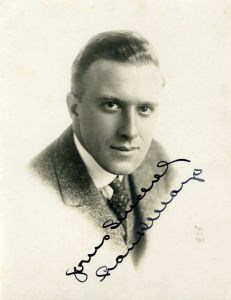
In the meantime there had been born to “Young Frank” [Edwin Forrest Mayo] and his wife [Frances Johnstone Mayo], a lusty, brown-eyed, golden-haired son, Frank Mayo, third, who is really the reason for this story. The youngster was born in New York City, but during the years of his young boyhood home to him meant the little Pennsylvania town among the hills. It was there that he really “grew up,” spending the time while his father and mother were “on tour” and always his vacations, whether the family were there or not, at the old Mayo home.
The boy was not very old before he rebelled at his family name, “Frank.” “What do you mean — Frank?” he said, scornfully. “Dear old granddad had to be ‘old Frank’ because father was ‘young Frank.’ Now what am I? I happened to be christened Lorimer Frank, so from now on I am Lorimer Mayo,” he announced to all whom it might concern.
Everybody “up home” knew “Lormy” Mayo, as he was called, as he ran wild over the hills and fields of the surrrounding country and thru the streets of the little town, creating considerable havoc by his impish pranks. The town of Canton, Pennsylvania is a veritable grove of handsome maple trees. It was the custom then to tap the trees in the early spring, insert spigots and hang pails thereon to catch the sweet and fragrant sap,
(PAGE 65 MISSING)
much for me, and I became identified with the London Film Company and did several pictures with Harda Shaw and George M. Tucker.
“Then, I tired of England. I wanted my own United States. So I left mother
there and came back, going at once to the coast. I worked under my uncle, Mr. Lorimer Johnson, in Santa Barbara for a time, then went with Selig where I supported Kathlyn Williams, Bessie Eyton and Fritzi Brunette. Later, I did two serials with Pathe, ‘The Red Circle’ and ‘The Price of Folly’ — then I came East and have been with World Film about a year.”
Mr. Mayo’s work in “The Witch Woman” and “A Soul Without Windows” with Ethel Clayton and with June Elvidge in “The Love Wraith” was exceptional.
“What about the future?” I wanted to know. “Is the name of Mayo to be known no more in the theatrical world — is the ‘lure of the movies’ strong enough to hold you for all the time to come?”
“It’s strong enough to hold me until I get what I want,” he said. “I have had several flattering offers from theatrical managers, but the stage is too uncertain. A contract with a film company means a steady job every day in the year, and that means something — so the chances are that I shall continue in pictures for a time at least. But, of course,” he continued, ” ‘the lure of the stage’ is in my blood, and probably some day I shall go back.”
“Do you want to know my real aim and object in life?” he said.
“Of course,” we quickly replied.
“Well,” he said, seriously and determinedly, “when I go back to the stage it
will be in a play of my own. One of my dreams has been to revive ‘Davy
Crockett’ and play the role that my grandfather and father played, and try to be a credit to the memory of those two wonderful artists.”
We noted his serious face, and we realized that in the passing of “Lormy” Mayo, Frank Mayo the Third had grown up — and may his dream come true.
— END —

 Pepito & Joanne